
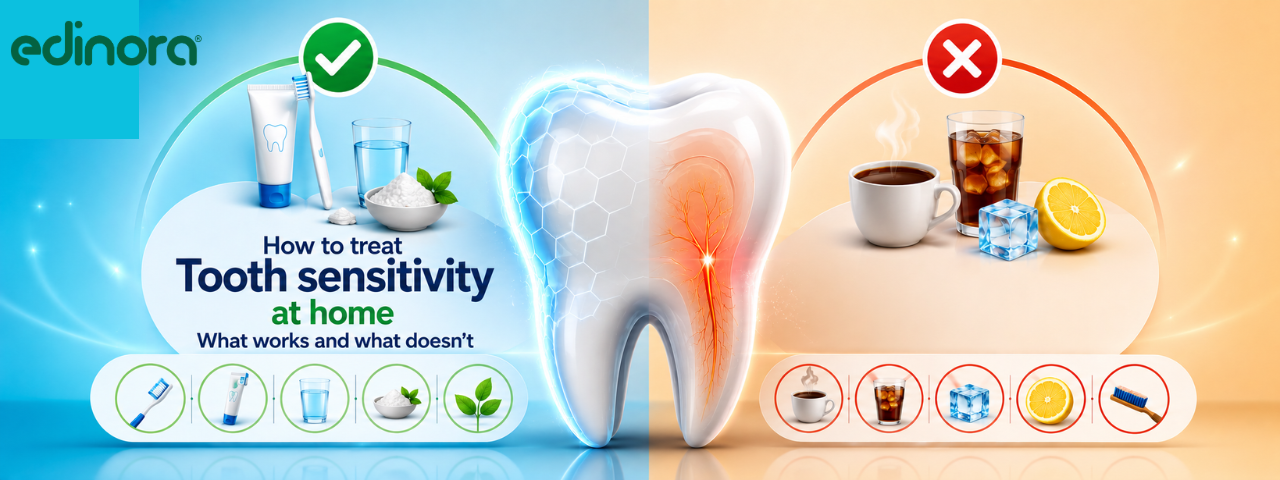
How to address Tooth Sensitivity at Home: What Works and What Doesn’t !?
If a sip of cold water or a spoonful of ice cream suddenly causes sharp pain in your teeth, you know how uncomfortable it can be.
That quick, unexpected discomfort is a common sign of tooth sensitivity.
And the first question most people ask is:
“Can I fix tooth sensitivity at home?”
The short answer is - yes, in many cases.
But it depends on what you do… and what you stop doing.
Let’s understand what really helps and what doesn’t.
What’s Actually Happening in Your Mouth?
Tooth sensitivity usually starts when the outer protective layer of your tooth (enamel) becomes thin, or when gums pull back and expose the root.
Under that enamel is a softer layer with tiny pathways that lead to the nerve.
When cold, hot, sweet, or acidic things reach those pathways, you feel that sharp pain. That’s sensitivity.
Common Signs of Tooth Sensitivity
Tooth sensitivity usually shows up in small but noticeable ways. You might feel a sharp pain when drinking cold water, discomfort while sipping hot tea or coffee, or a sudden sting when eating something sweet.
Some people notice it most while brushing. Others feel a quick, sharp sensation in one specific tooth that seems to react to everything.
If any of this sounds familiar, your teeth may simply need gentler care.
Habits That Make Sensitivity Worse
Some everyday habits quietly make things worse:
- Brushing too hard
- Using abrasive whitening toothpaste
- Drinking too much lemon water or soda
- Grinding teeth at night
- Trying DIY hacks like charcoal or baking soda
These slowly wear down enamel and irritate already sensitive areas.
How to Reduce Tooth Sensitivity at Home
1. Switch to a Gentler Toothpaste
This is the simplest and most effective step.
Some sensitivity toothpastes work by temporarily numbing the nerve. That may reduce pain for a while, but it doesn’t always address why the tooth became sensitive in the first place.
Sensitivity is often linked to:
• Worn enamel
• Gum irritation
• Plaque buildup
That’s why choosing a non-abrasive, gentle toothpaste can make a real difference.
Look for a toothpaste that cleans without scratching enamel or irritating already sensitive areas. Avoid harsh foaming agents and unnecessary additives that can dry or irritate the mouth.
Toothpaste made with mild, soothing ingredients and free from strong detergents or artificial colours may feel gentler over time, especially if your gums are already irritated.
2. Use a Soft Brush
If your toothbrush looks worn out quickly, you may be brushing too hard. Switch to a soft-bristled brush and use gentle circular motions. Let the brush do the work, don’t scrub.
3. Wait After Eating Acidic Food
If you eat something acidic like citrus fruits, don’t brush immediately.
Wait at least 30 minutes. Rinse with water first. Brushing too soon can damage softened enamel.
4. Avoid Abrasive DIY Hacks
Charcoal and baking soda may look effective online, but they are abrasive. They can worsen sensitivity over time. Gentle care works better than aggressive cleaning.
What Helps — and What Doesn’t
|
Remedy |
Does it Work? |
Why? |
|
Salt Water Rinse |
Yes |
It balances pH and calms gum irritation. |
|
Sensitive Toothpaste |
Yes |
The gold standard. Blocks those "nerve tunnels." |
|
Clove Oil |
Temporary |
It numbs the pain but doesn't fix the cause. |
|
Charcoal / Soda |
No |
Too scratchy. Destroys enamel over time. |
When to See a Dentist
Home care works in many cases. But see a dentist if:
- Pain is severe
- Sensitivity is only in one tooth
- You notice cracks or holes
- Gums are swollen or bleeding
Toothpaste helps, but it doesn’t replace diagnosis.
Final Thoughts
Tooth sensitivity doesn’t need stronger products. It needs smarter, gentler care.
Small changes, such as softer brushing, avoiding abrasives, and using a gentle toothpaste, can make daily life more comfortable. Consistency matters more than quick fixes.

Leave a Comment